The 68th edition of the prestigious World Press Photo contest has crowned a powerful and poignant photograph as the winner, shedding light on a young Palestinian boy’s struggle after losing both arms in an Israeli attack.
A Tear-Jerking Moment
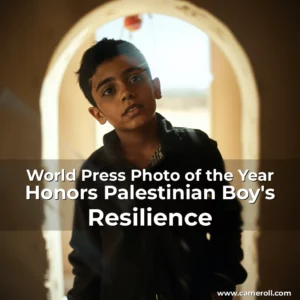
The photo, taken by Qatar-based Palestinian photographer Samar Abu Elouf for The New York Times, captures the heartbreaking moment when 9-year-old Mahmoud Ajjour first realizes he is missing both arms. The image shows a young boy, barely holding on to his life, with his arms severed just below each shoulder.
“One of the most difficult things Mahmoud’s mother explained to me was how when Mahmoud first came to the realization that his arms were amputated, the first sentence he said to her was, ‘How will I be able to hug you?'” – Samar Abu Elouf
This poignant moment is more than just a snapshot; it’s a window into the life of a young boy struggling to come to terms with the loss of his limbs. The photo is a testament to the resilience of the human spirit and the impact of war on innocent lives.
A Global Response
The winner of the 68th edition of the prestigious photojournalism contest was selected from an impressive 59,320 entries submitted by 3,778 photographers from 141 countries. This year’s winning photograph has garnered a global response, with many praising the power and poignancy of the image.
- The World Press Photo Executive Director Joumana El Zein Khoury stated that “This is a quiet photo that speaks loudly. It tells the story of one boy, but also of a wider war that will have an impact for generations.”
- Lucy Conticello, jury chair and Director of Photography for French newspaper Le Monde’s weekend magazine, described the photo as “This young boy’s life deserves to be understood, and this picture does what great photojournalism can do: provide a layered entry point into a complex story, and the incentive to prolong one’s encounter with that story.”
A Personal Connection
The winning photographer, Samar Abu Elouf, has a personal connection to the story. She was evacuated from Gaza in December 2023 and now lives in the same apartment complex as Ajjour in Qatar’s capital, Doha. Abu Elouf’s involvement in the story adds an extra layer of authenticity and depth to the photograph.
| March 2024 | Israel launched its devastating war in Gaza. |
| Oct. 7, 2023 | Hamas launched a terrorist attack on southern Israel, resulting in the deaths of thousands of civilians and militants. |
A Broader Context
The Israeli-Palestinian conflict is a complex and multifaceted issue, with both sides blaming each other for the heavy civilian toll. The Health Ministry in Hamas-ruled Gaza says more than 51,000 Palestinians have been killed in the Israeli offensive, with over half of the dead being women and children, including at least 876 infants under 1.
- A photo by John Moore for Getty Images shows Chinese migrants warming themselves up after crossing the U.S.-Mexico border at night.
- A picture by Musuk Nolte for Panos Pictures, Bertha Foundation, shows a young man carrying food across a dried-up river bed in Brazil’s Amazon basin region.
A Tribute to the Victims
The World Press Photo finalists also highlighted the issues of migration and climate change. The winning photograph is a tribute to the victims of war and a reminder that their stories deserve to be told. “This young boy’s life deserves to be understood, and this picture does what great photojournalism can do: provide a layered entry point into a complex story, and the incentive to prolong one’s encounter with that story.”
A Message from the Jury Chair
Lucy Conticello, jury chair and Director of Photography for French newspaper Le Monde’s weekend magazine, added, “This young boy’s life deserves to be understood, and this picture does what great photojournalism can do: provide a layered entry point into a complex story, and the incentive to prolong one’s encounter with that story.”
Conclusion
The 68th World Press Photo of the year is a powerful reminder of the impact of war on innocent lives. The winning photograph is a testament to the power of visual storytelling and the importance of sharing the stories of those affected by conflict. As we move forward, it is essential that we continue to tell the stories of those who have been silenced or marginalized, and provide a voice for the voiceless.